Making Heap extremely usable.
Heap deployed Califa in 2021. Califa shaped the design team, set the product vision, ran Extremely Usable, a company-wide push to make the product easy to use across every product area, and owned the rebrand until Contentsquare acquired Heap in 2023.
- usability tests in one week in Austin
- 32
- prototypes narrowed to one navigation
- 14
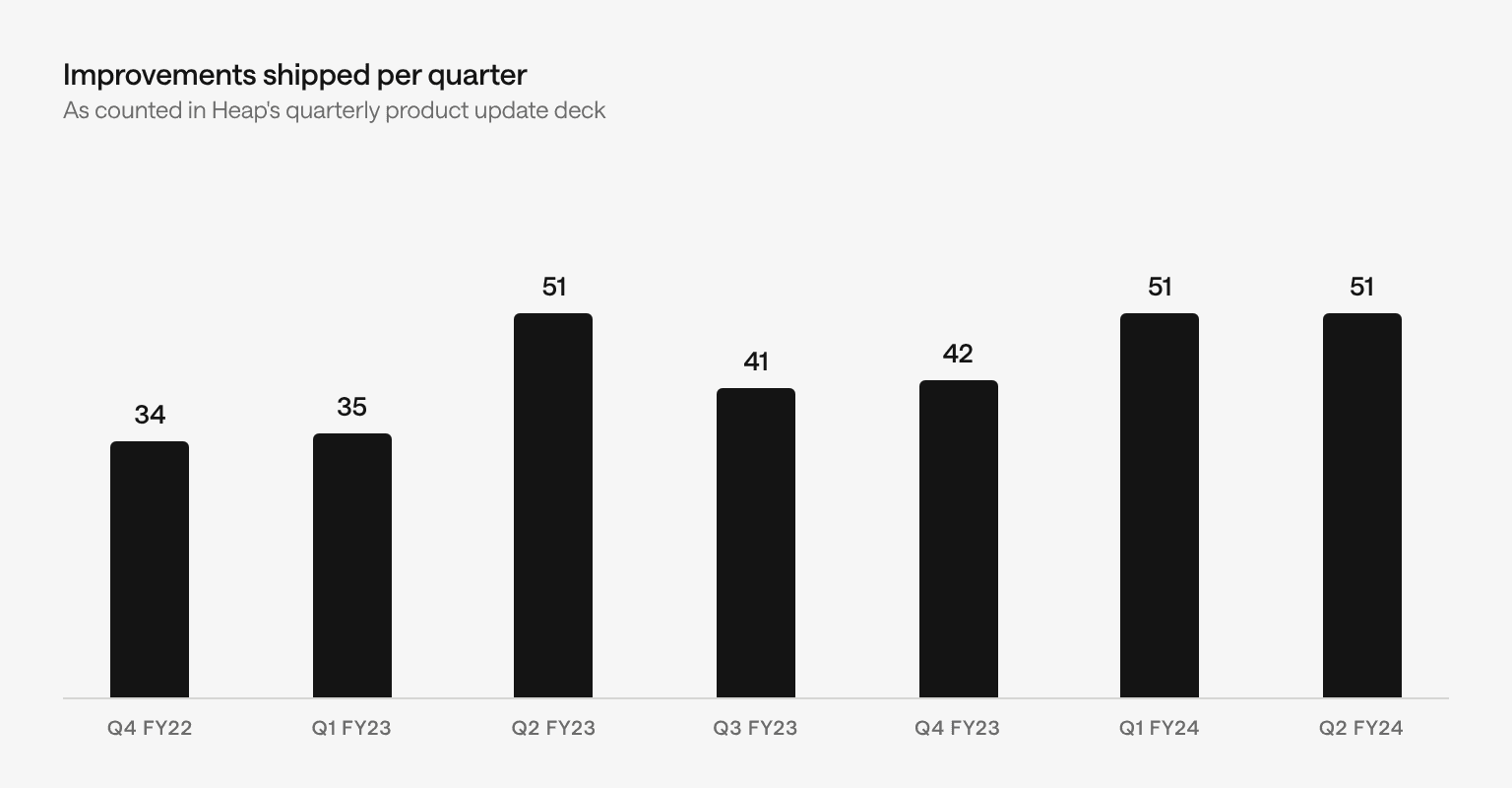
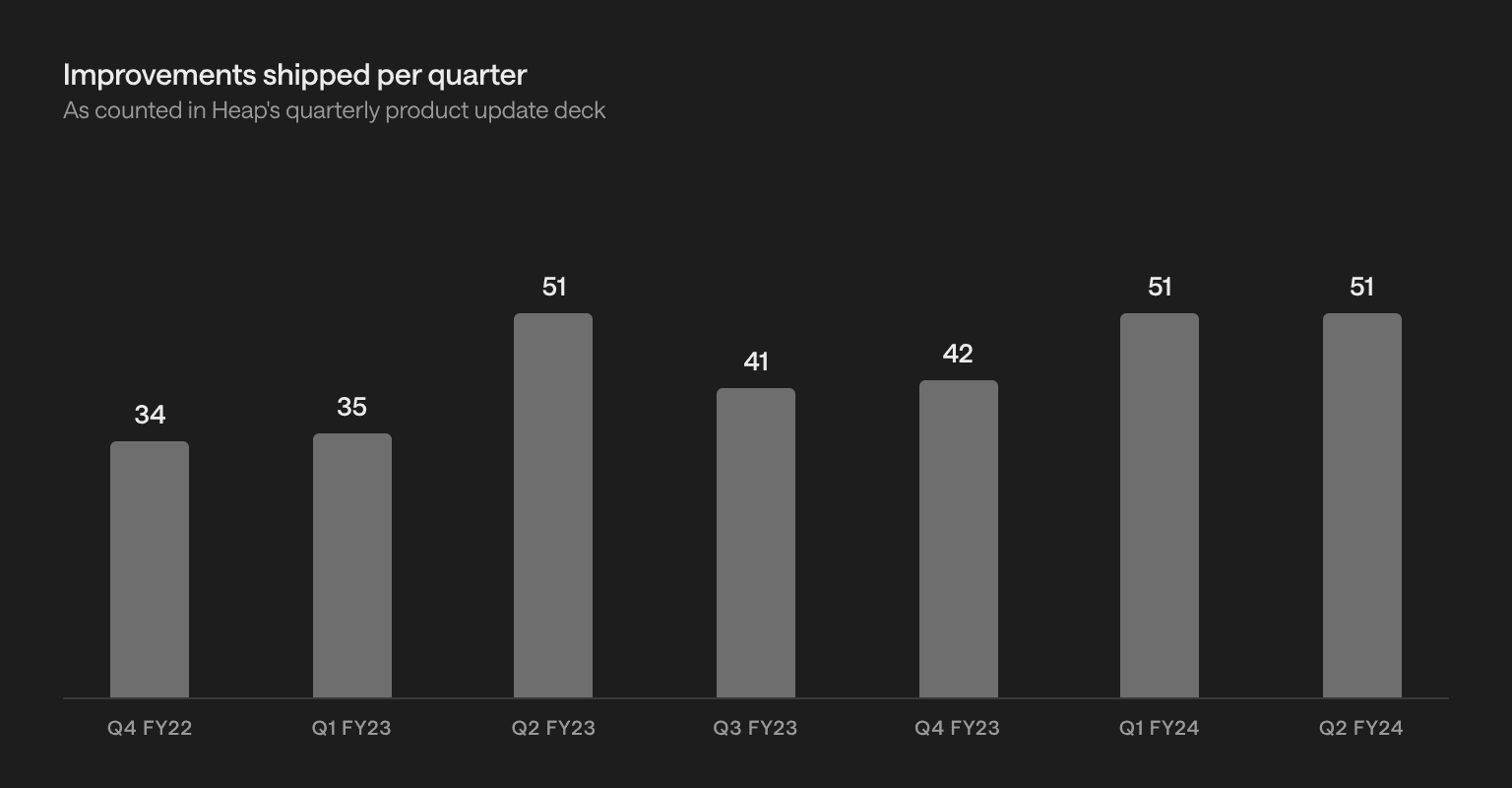
- XU ships in a quarter at the peak, up from 34
- 51
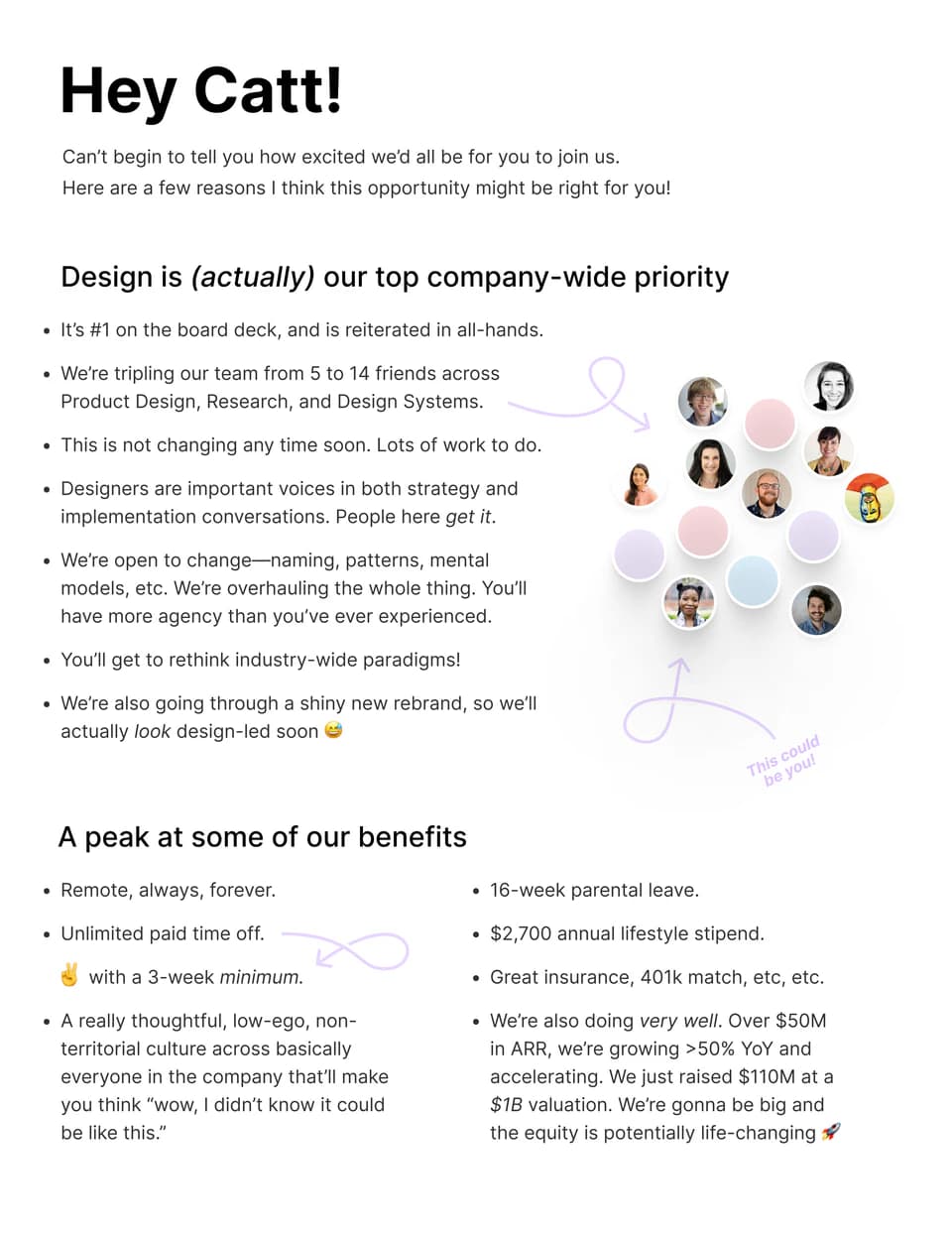
When Heap deployed Califa in 2021, its design team had several distinct strengths. One designer was particularly strong at product thinking, another had very good instincts for what made a good user experience, and another brought strong systems thinking. What the team lacked was visual craft. The work was generally functional, but it wasn’t consistently reaching the level of visual quality Heap needed.
Hiring more designers with the same strengths wasn’t going to close that gap. Califa looked for someone with an exceptional eye for visual design, not only to add the skill but so the rest of the team would learn from them. A team doesn’t need everyone to be equally good at everything. It works better when people have distinct strengths and pick things up from each other.
 7 pages
The same thinking shaped session replay. Session replay changed how Heap customers understood behavior: instead of reading events and charts, they could watch exactly what happened. Heap acquired a company for the replay technology, and along with the technology, the product brought in new problems around video and navigating long recordings. Califa hired a designer with experience in video-based software to lead the design, even though they had never worked on analytics. That background mattered more for the problem than analytics experience did.
Heap’s employees also weren’t clear on where the company and its leadership were headed, so Califa built a product vision to align and excite the company. Heap’s thesis was that autocapture would win. Califa gathered the strongest ideas already floating around the company into one platform story, told as a day at a fictional customer, and defined, storyboarded, illustrated and presented it in under two weeks. The illustrations stayed sketchy so nobody mistook it for a roadmap. It gave Heap’s sales team a story to sell beyond feature-for-feature competitor pitches. On Heap’s Culture Amp survey, “the leaders at this company have communicated a vision that motivates me” went from 60% before the all-hands to 100% on the next one. A year later the bets were landing: Heap was shipping the session replay workflow from the vision, after an acquisition that was made with the vision in mind.
 18 min
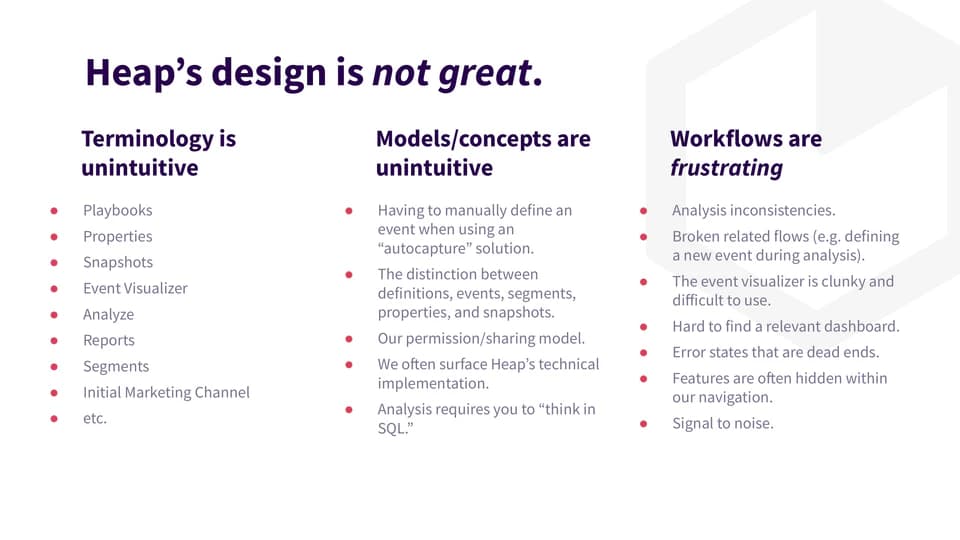
The product also had a bigger problem than any one team could fix. The terminology was unintuitive (playbooks, snapshots, the Event Visualizer), the concepts were hard to learn, and the workflows surfaced Heap’s technical implementation. It contributed to churn in new users, and competitors brought it up in deals. Product teams already pulled quick wins from a shared papercuts backlog every sprint, but the worst problems lived between product areas, where every team could see them and no team owned them.
In February 2022, Califa presented XU, short for Extremely Usable, at the product town hall. It came with targets for the end of FY23: new-user NPS from 0 to 40, new-user adoption from 22.5% to 35%, and trial activation from 22% to 35%. A core team owned the problems that lived between product areas: information architecture, terminology, visual design and the metrics to tell whether any of it worked. Leads from every product area met with it regularly and took the work back to their roadmaps.
 24 slides
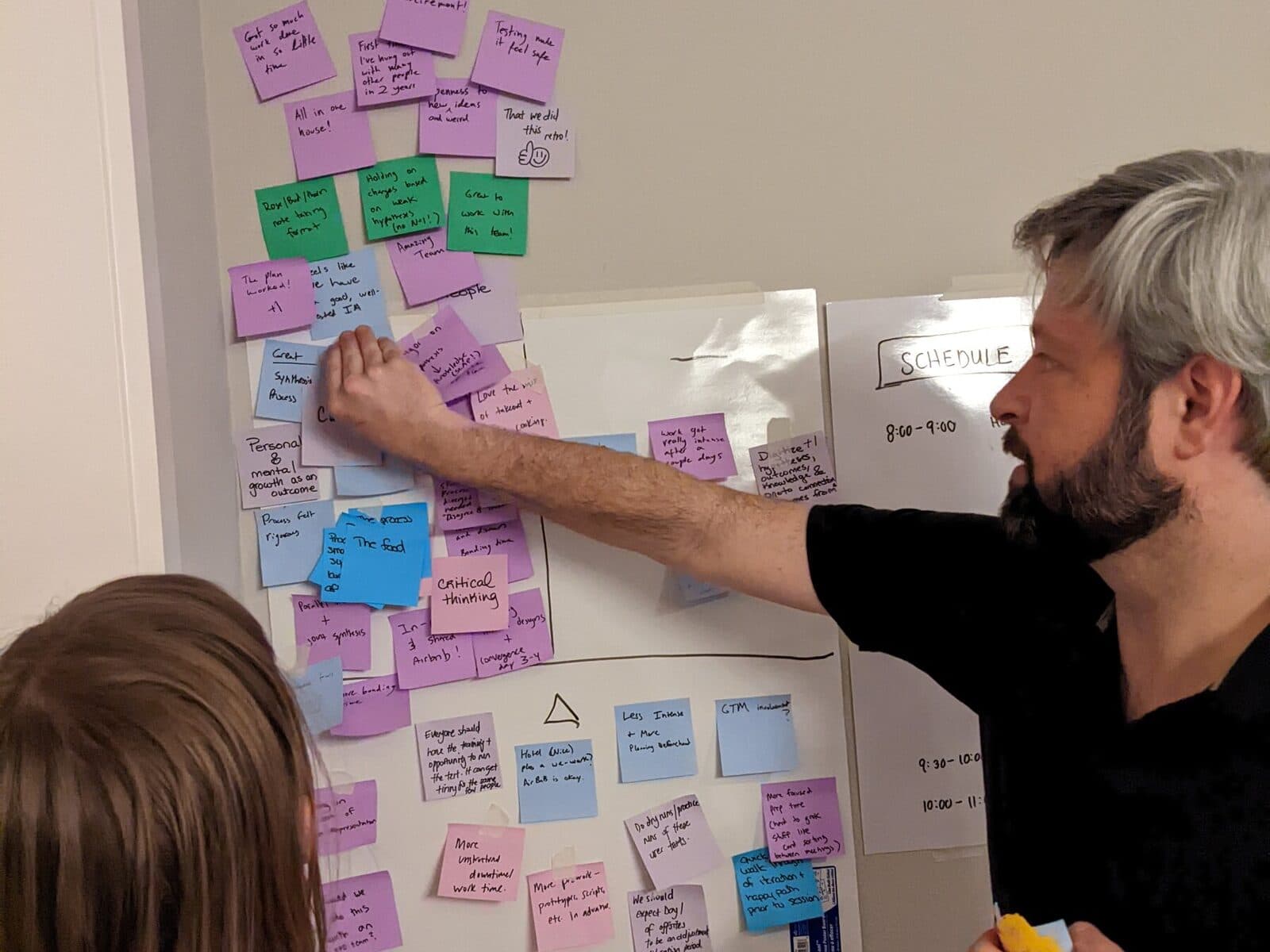
XU ran in waves: a month or two of prework, then one intense week of research. For Wave 1, the team spent a week in a house in Austin running 32 usability tests. The week started with four prototypes, each a different idea of how Heap should be organized. By Friday the team had been through more than 30 iterations and 14 prototypes, and they converged into one navigation. Nine existing customers then ran the same tasks to make sure the new structure didn’t break the workflows they relied on.


The results shipped in milestones so customers could absorb one change at a time. New terminology went out as an A/B test and then to everyone in July 2022. Megatabs put every analysis type in tabs across the top of one page. Before it, 61% of new users didn’t run a query in their first week, and most of them dropped off before reaching a screen where they could. After Megatabs went out to everyone in September 2022, the share of new users who reached an analysis page rose by more than 20 percentage points, and the share who ran a query in their first week rose by 4. Each quarter, every XU ship went into a company-wide deck, one slide per ship. Teams started wanting their fixes in the next one, and the count went up and stayed up.
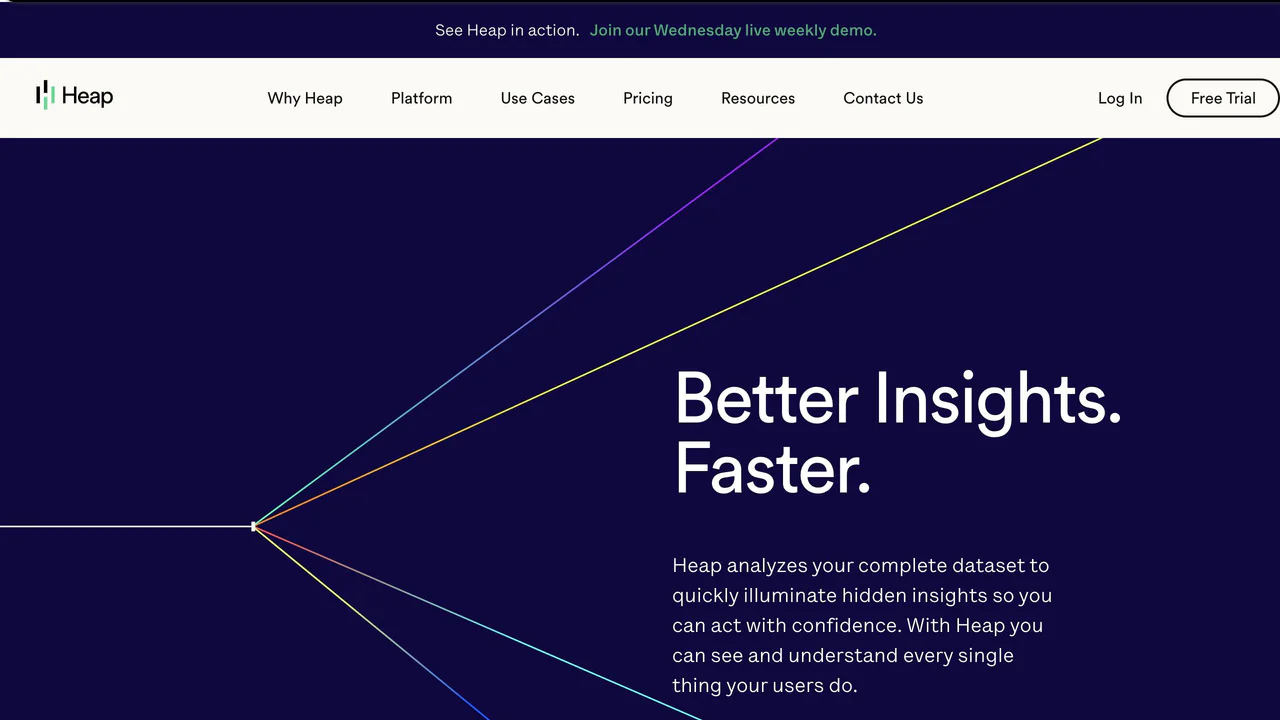
Alongside XU, Califa owned Heap’s rebrand, which had started much earlier. Soon after deploying, Califa began looking for a new agency, because the one Heap worked with at the time wasn’t producing work of the quality Heap needed. Califa owned the project inside Heap. It interviewed many agencies before choosing Fictive Kin, then managed the process while Fictive Kin did the design, guiding the work along the way. Heap had a product few people understood, and its brand led with technology and features instead of the customer’s language and outcomes. The new brand went with Illumination: proactive insights, a bright teal, and ownable design moments like the X-ray toggle on the website.
The deployment ran until 2023, when Contentsquare acquired Heap.

“Califa is best-in-class at turning strategy into something a whole company can see. Its vision process led to a concrete roadmap we actually shipped in 2 years.”

More from the deployment.
 6 min read
 63 slides
 20 slides
Ready to deploy?
Rollout takes about a coffee. He shows up and starts working.