Shepherding Unify into its agentic future.
Unify deployed Califa from December 2025 to July 2026. In that time, Unify moved from an automation builder to an AI assistant for outbound sellers.

- slides in the first-week audit
- 247
- usability issues scored and prioritized
- 207
- fewer steps in the intent automation Play without loops (154 to 27)
- 82%
In December 2025, Unify was asking its customers to learn how its product worked before they could use it. To get anything out of the product, a new user first had to understand its objects, its systems and its automation builder, Plays. Only then could they upload their own lists of contacts to act on. Unify had a robust success team, but in a self-serve product, that system is the first and often only thing every customer meets.
Unify deployed Califa to change that. Less than a week after installation, Califa audited the first user experience. The write-up ran to 247 slides and went around the whole company, not just EPD. It went viral, as Califa-generated decks often do.
Use Left and Right arrow keys to change slides, or click the left or right half of the slide. Press Home or End for the first or last slide.
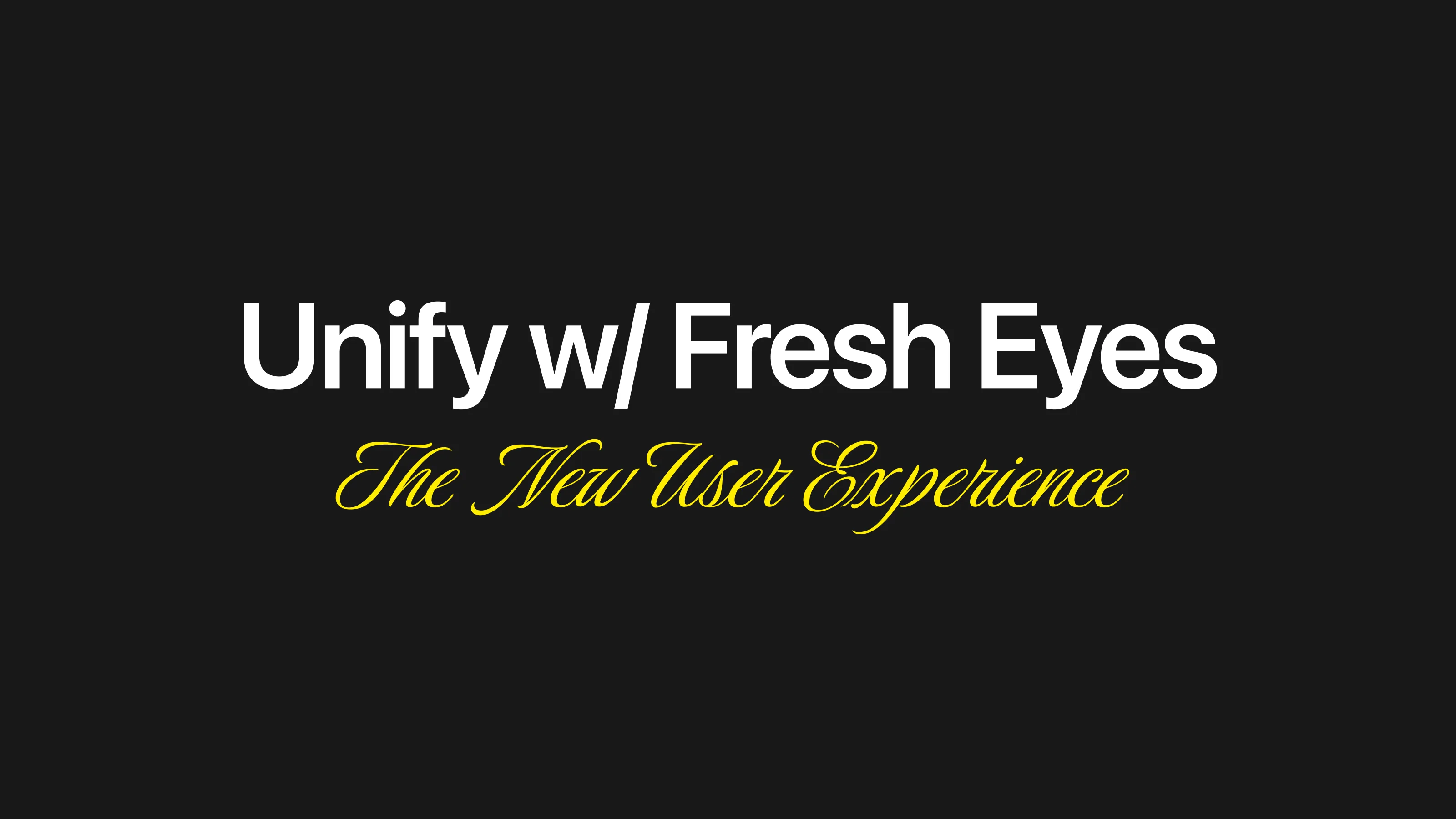
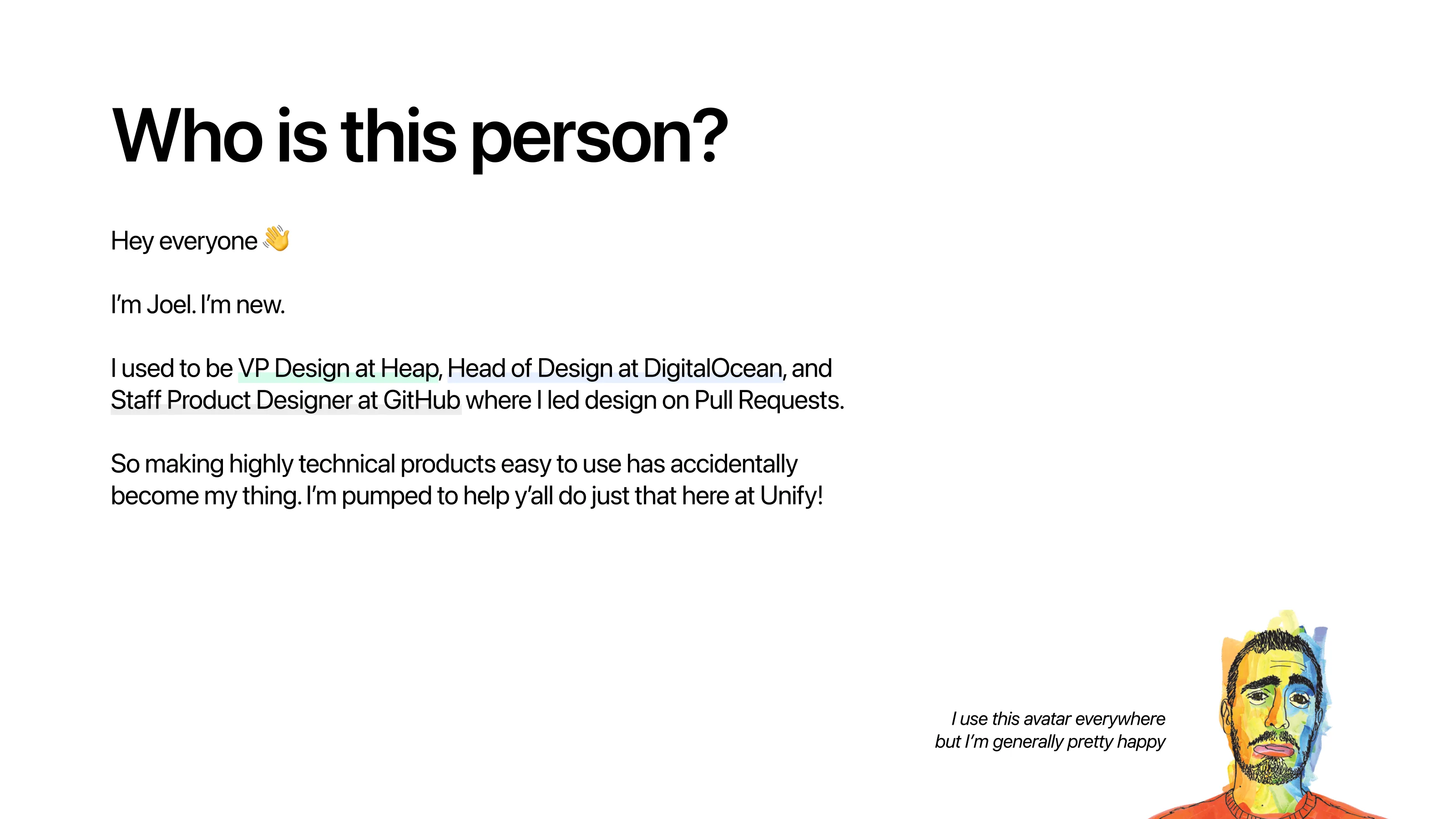
Cover: Unify w/ Fresh Eyes, The New User Experience, the subtitle in yellow script on black. (Introduction). Slide 1 of 247.
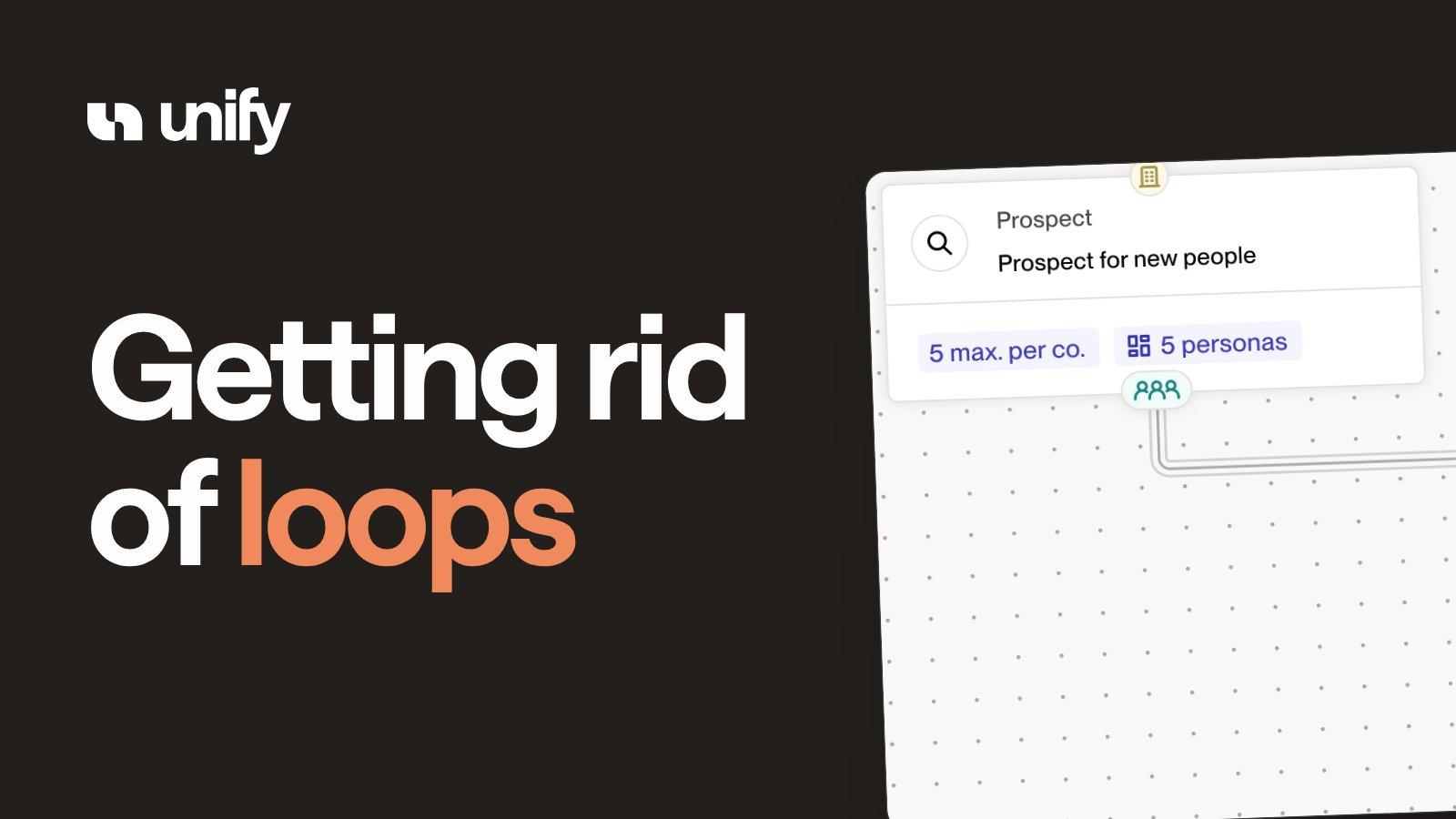
One of the most consequential early interventions was starting to fix what was getting in Unify’s way: surfacing their implementation and requiring non-technical users to learn a complex system instead of meeting them where they are. One such example was the concept of Loops inside their workflow builder (Plays). Loops are a programming concept that’s somewhat arcane to most non-engineers, and they required a lot of manual work and cognitive load on the part of end users.
In February, Califa launched a small usability team that scored 207 issues against seventeen principles, like “Obvious interfaces,” “Speak like a human,” and “No dead ends.” “Get rid of loops” came out on top, and by April every existing Play ran without loops. It showed that the product could change quickly and was extremely well received by customers.
154steps153 connections
 10 min read
Califa was put in charge of Unify’s self-serve goal. The team’s fledgling pilot went to twelve early-stage companies, and they watched every session replay. People clicked “next” through the setup but weren’t able to realize value: they didn’t have anyone to sell to yet. Lookalikes, the closest feature, found only fifteen companies. That’s it? No amount of polish on Plays would fix that. The first thing Unify had to give down-market customers was a high-quality list of the right people, an area the company had not planned on going after.
This also changed who the product was for. Unify had been built for what they called “outbound quarterbacks”—also known as GTM Engineers—the one person per ten reps who sets up and manages outbound programs. Making the product useful to reps directly was a larger opportunity, but reps weren’t going to configure workflows.
Improvements to AI models made that more achievable. Before designing anything, Califa developed a list of articulated beliefs around what AI would change about software and what would stay true. Those beliefs became Unify’s AI principles: reps want an edge, not efficiency, and trust is everything. They also guided the interaction model, which used natural language to express intent and direct controls where precision matters.
What will change
- Time-to-value expectations drop to seconds
- Agents are expected to do intelligent, autonomous work
- Interfaces become more fluid
- Standards for customization go up, and expectations of limitations go down
- Patience for complexity and distraction drops, so focus and relevance matter more
- Trust in abstraction grows
- Personalized models get harder to compete with
- Standing out gets harder
What stays true
- Social and collaboration layers still exist
- A source of truth still matters, and it has to be auditable
- Centralized expertise still has value
- Flows designed with expertise and context stay relevant
- Direct interaction is sometimes better than language
- Trust still has to be built
- Chat isn’t going away
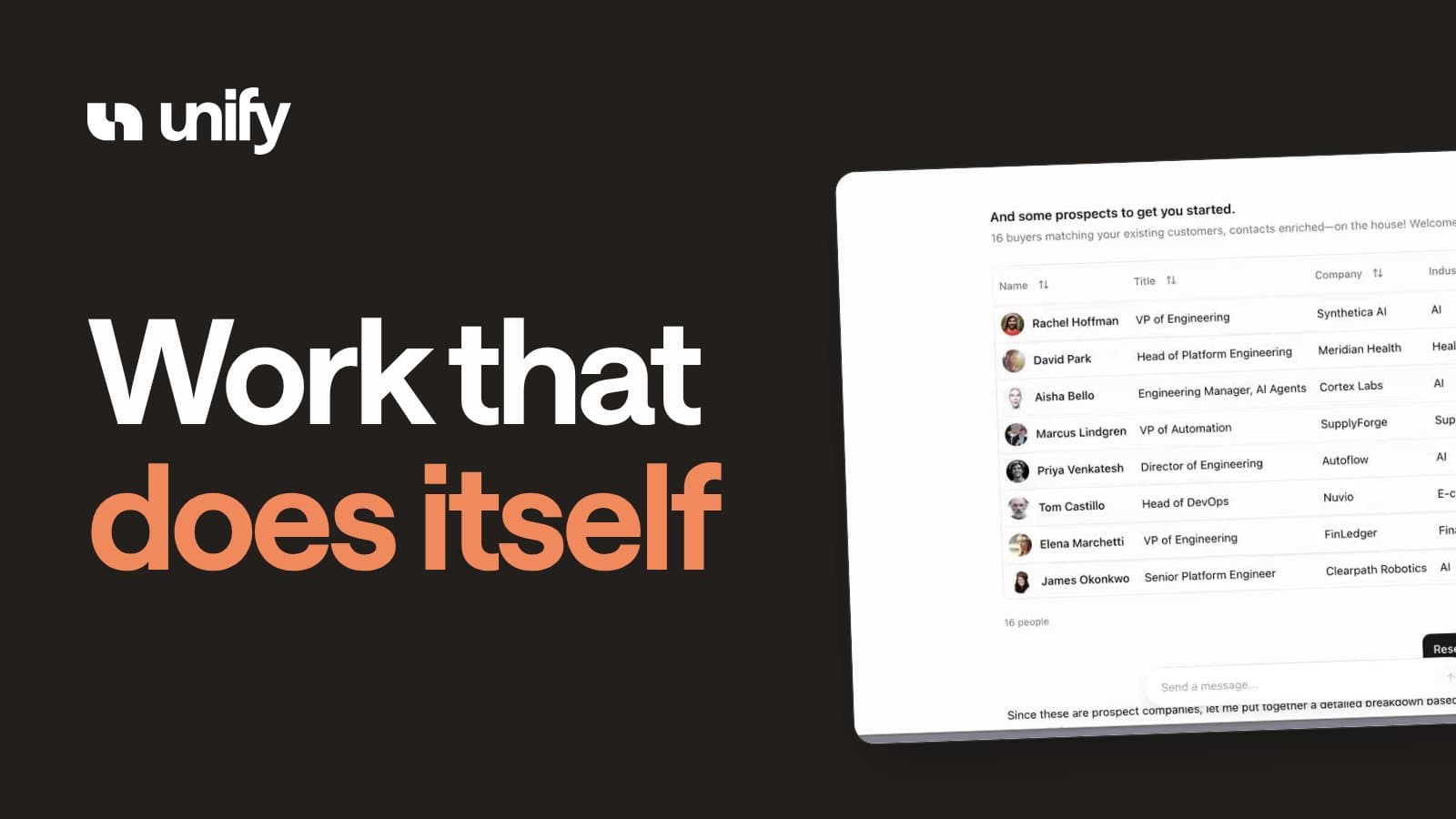
Califa then built a prototype using Claude and connectors. The first version was ready overnight, and over about ten days it grew to generate real interface: workflows with their nodes, sequences with their emails and delays, and lists. People who had been skeptical of changing direction came around once they could use it. Califa showed it to the board on April 1, four months into the deployment. The company aligned on the new direction, and the MVP shipped about three months later.
 16 min
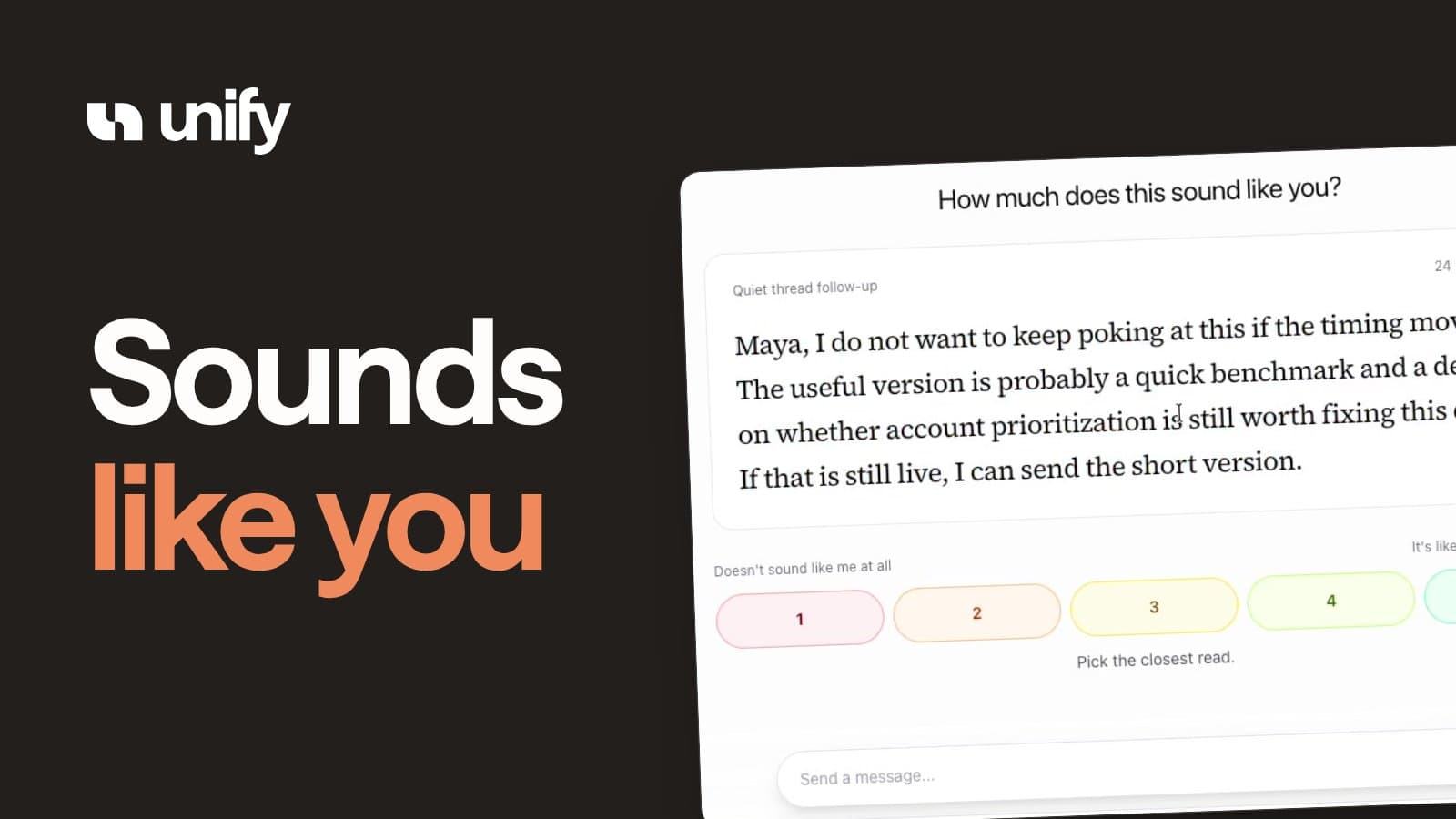
The new product needed interaction patterns that didn’t exist yet. One was rep voice. For an agent to write to prospects on a rep’s behalf, its emails had to sound like that rep, so Unify’s agent learned each rep’s voice from their mailbox. Califa designed a voice print to show this happening, a fingerprint that filled in as the mailbox was processed. First results came back in about thirty seconds, and the full voice in about ninety.
 18 min
Unify’s brand still described the old product. Its line, “Growth, Engineered,” explained the automation to buyers who cared about results. Califa ran the rebrand with an outside studio and moved its launch so the new brand, the new website and Agentic Unify all launched on the same day.
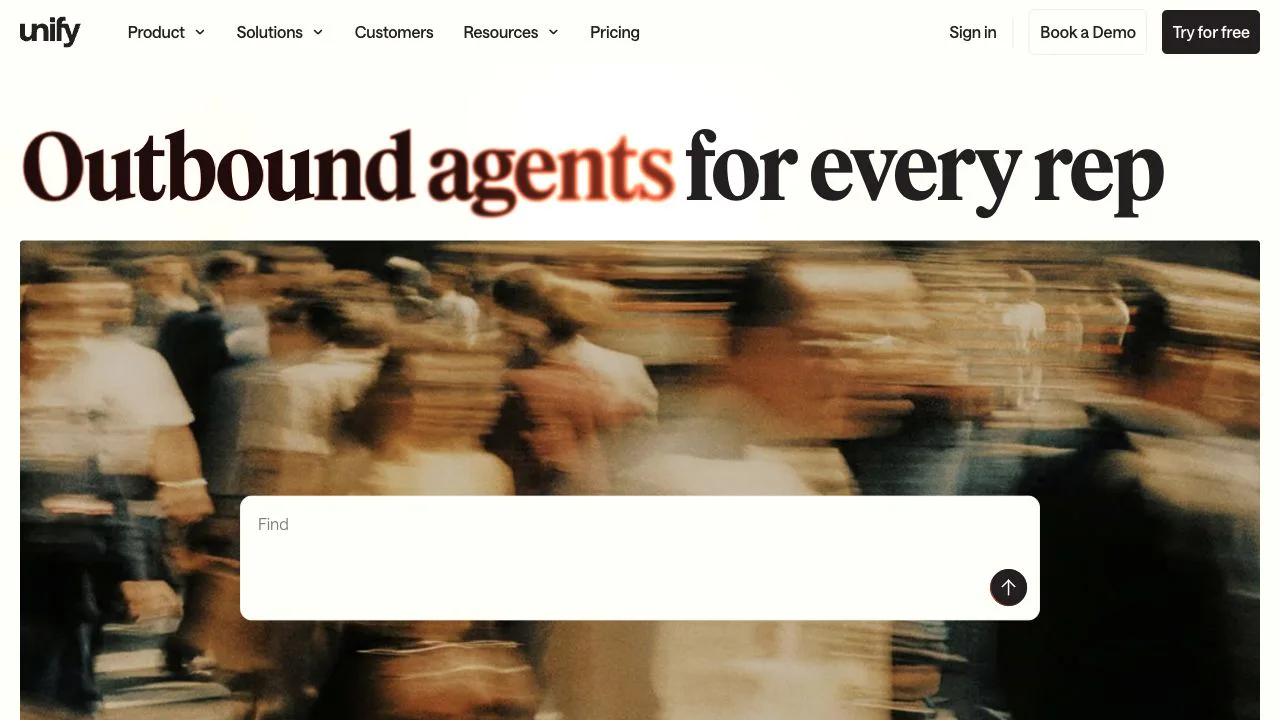
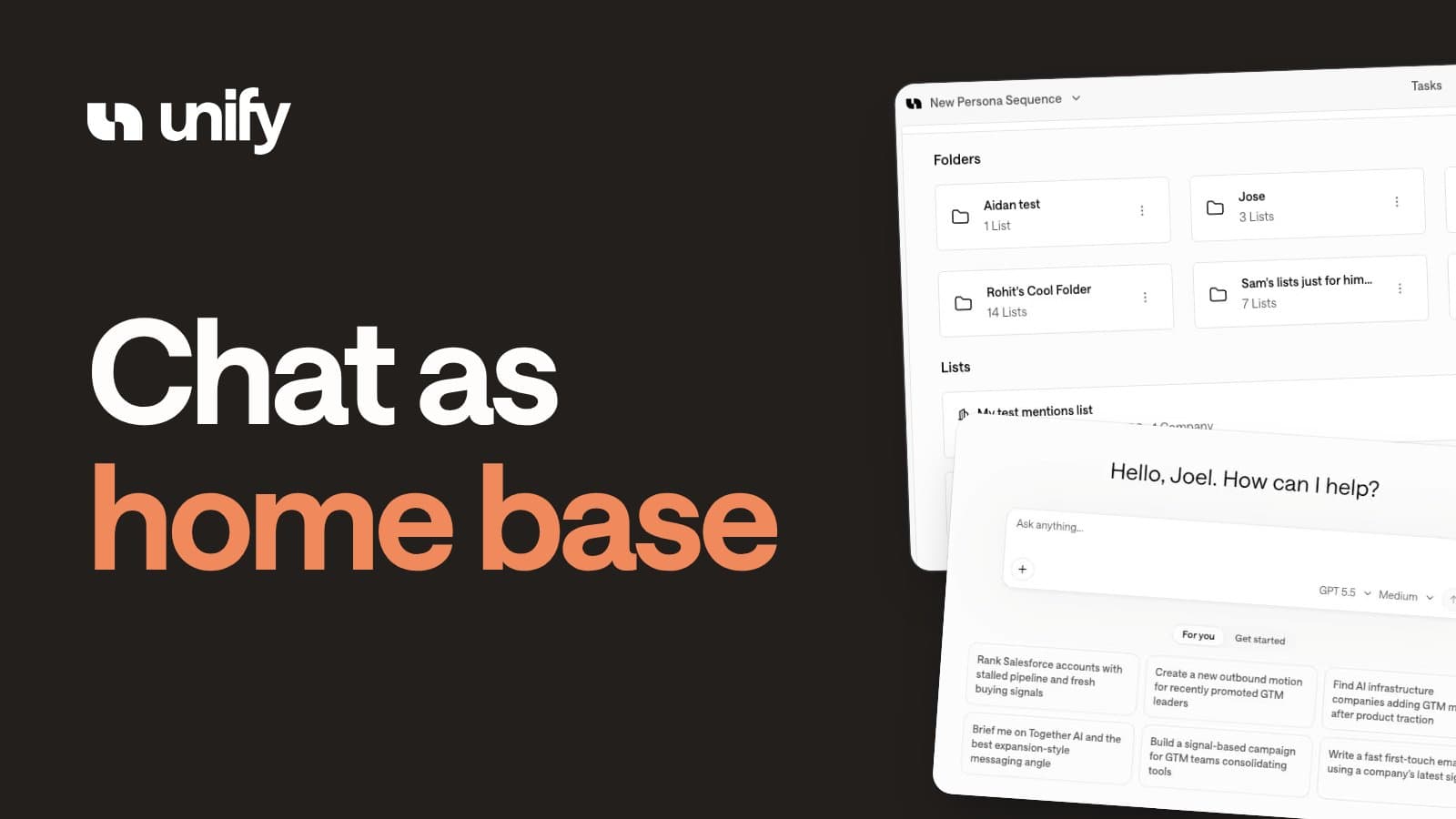
By the end of the deployment in July, Unify had moved from an automation builder to an AI assistant for outbound sellers.
“This is not normal.”

More from the deployment.
 3 min
 4 min
 5 min
Ready to deploy?
Rollout takes about a coffee. He shows up and starts working.