How DigitalOcean built a design team.
DigitalOcean deployed Califa in August 2014 and moved it into design leadership a year later. In two years the team grew from three designers to eleven, raised its quality bar, and earned the trust of the rest of the company.
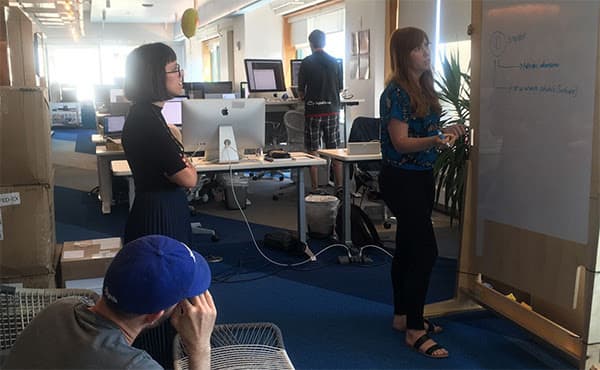
- Team size
- 3x
- Design ramp time
- 2 wks
- Coworkers excited about Design
- 300+
- IPO citing simplicity
- $8B
DigitalOcean first deployed Califa as an individual contributor. Within a year Califa had set up site-wide data tracking with Segment, a structure for the CSS, a process for managing design patterns, and a recruiting pipeline built from scratch. None of that was in the original scope.
A year in, the company needed design leadership, and Califa moved into the role. The plan included more time for individual contributor work. That part of the plan did not ship.
In the first few months Califa rolled out a new onboarding process, a fuller recruiting process, a weekly design retro, and regular design reviews. The team wrote down its values, defined its design principles, and agreed on a checklist for every Product Design release. Over the first year, Califa hand-picked each new designer and doubled the team.
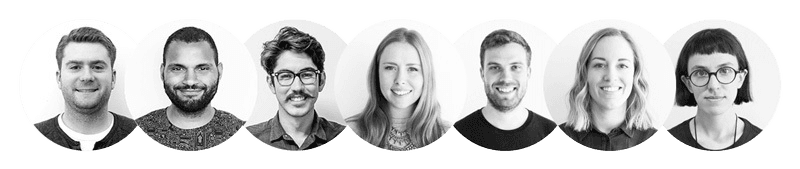
Two years in, Califa had dropped the Lead title and was running the team as its manager. The job was keeping a group of very good designers happy, engaged, and doing their best work. The products this team shipped are covered elsewhere. This page covers the work behind them: how the team grew, how its standards went up, and how it got the rest of the company to listen.
DigitalOcean found its foothold by doing one thing well. It sold virtual private servers, called Droplets, at an affordable price, in an industry that had set a low bar for experience design. Spinning up a server on DigitalOcean was relatively easy, and that set it apart.
The company had 60 people when Califa was deployed and grew into the second-largest cloud by web-facing servers. Simplicity, and with it design, was part of the culture from the start. People across the company agreed that good design was a big part of its success. The first of DigitalOcean’s core values matched the first line of the company strategy: deliver great experiences. The conditions for good collaboration were already there. The design team needed to earn the company’s trust and keep it.
- 01
- Strive for simple and elegant solutions.
- 02
- Respect your peers.
- 03
- Speak up and listen when others do.
- 04
- Trust and be trustworthy.
- 05
- Our community is bigger than just us.
- 06
- Love is what makes us great.
Califa started with three goals: raise the quality of the design work, build trust with the rest of the company, and grow the team and improve its performance.
At the start the team was one Product Designer and two UI Designers. There was plenty of raw talent, but performance was uneven, mostly because nobody had ever said what was expected. The company was growing, and three designers couldn’t cover all of its products. Four new designers were about to join, so Califa started with accountability.
Califa’s first project as a manager was a new meeting, called Goalfest: a retro with a spreadsheet. Each designer set their own tasks for the following week. In the meeting, everyone rated last week’s tasks from 1 to 5 by how complete they were, with notes on what got in the way and what helped. The biggest lessons went under a Lessons Learned heading. Over time the team got better at estimating a week of work and learned which kinds of work were hardest for whom.
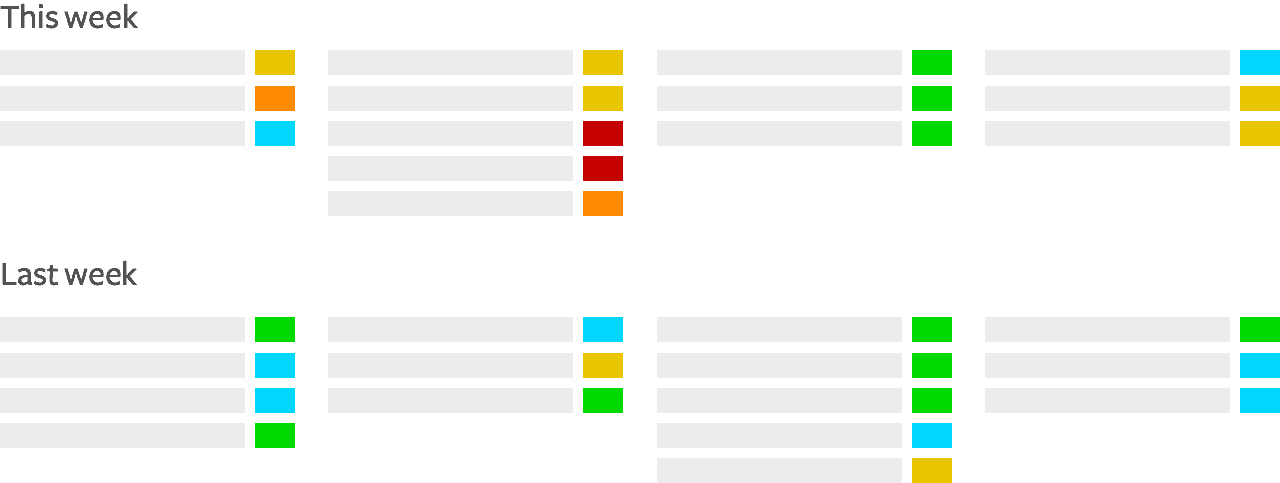
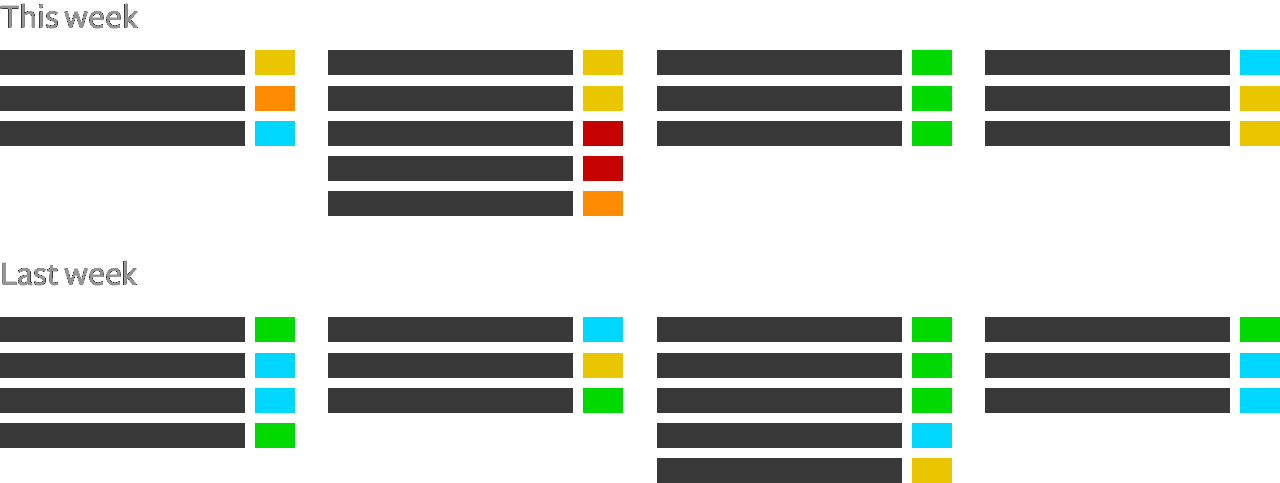
The format changed constantly. Tasks got hour estimates, then t-shirt sizes. The team tried the sheet with a meeting and without one, tried categories, tried broad tasks and very specific ones, and moved the deadlines around. The meeting existed for the designers, so it kept changing until it was useful to them.
Goalfest wasn’t novel, but the team had never had anything like it. Productivity and accountability both went up substantially. Other teams at DigitalOcean adopted it, as did design teams at BuzzFeed, Facebook, and elsewhere. InVision included it in “Meetings That Will Make Everyone a Design Leader.” The approach behind it is written up in Trust & Product Design.
Goalfest showed results within about a month, and the team was ready to grow. As an individual contributor, Califa had met with several design leaders, collected their recruiting advice, and set up DigitalOcean’s first methods for recruiting top-tier designers. Hiring starts with sourcing and marketing, then first contact, getting people interested, interviews, and onboarding. It ends when the new hire is a fully integrated, productive member of the team. To scale recruiting past one person, Califa built processes for filling the pipeline and monitoring it. Designers got set times each week to source candidates, and scripts for selling them on DigitalOcean.
Sourcing (30 minutes per week)
Each of us spends 30 minutes per week selecting 5 talented designers we wish to hire. Some designers may find it advantageous to do 1x / day or whatever routine they choose.
Who are we looking for?
We’re looking for an autonomous designer, with skills (in this order of relevance):
1.Product sense / systems thinking
Will be able to restructure IA and flows to improve usability and solve business problems?
2.Communication
Will be able to work with product teams and articulate design decisions?
3.Interaction design
Will be able to design intuitive interfaces and delightful interactions?
4.Visual design
Will be able to design beautiful interfaces and evolve our styles?
5.Coding skills
Will be able to prototype what they design?
Bonus: cares about developers and dev tools
Reaching Out (30 minutes per week)
Contact
Each of us reaches out to the designers we found via email or twitter and send a friendly, non-recruiting message to open up a line of communication.
The message should include something personal about specific work they’ve done that we like. The key here is sincerity, don’t be salesy. You’re developing a relationship with another like-minded designer. This is a good thing, even if they don’t end up at DigitalOcean.
Place new designers in spreadsheet based on the process outlined there.
The Pitch Call
After back and forth for a while, set up a call. Knowing when this is can be tricky, feel free to ask me. Talk about design and be honest, come out with it that you’d love to interview them for a PD position at DigitalOcean. Sincerity is key.
Make these points as they come up.
Key points:
- We’re growing fast. Now almost 300
- Profitable
- Company culture is amazing and generous
- Culture of thanks (Serge kudos story)
- Catered meals every day from LOCAL RESTAURANTS
- Standing desks, monitors + all the usual stuff startups do
- Company ski trip + shark week + avalon summer trip + wework summer camp
- etc, whatever you think of.
- The team is like a family. Best team culture. You’ll get to work with a large team of awesome designers.
- Design reviews
- Hanging out
- We have A LOT of users and are very well known.
- Most of our competitors basically copy us. You get to work on PARADIGMS for how people think about this stuff in the future and how other companies do it. What’s the future of cloud storage? What’s the future of load balancing? Etc.
- You’ll get to own an entire product vertical. For instance:
Califa personally reached out to every designer the team hired and guided each one through the process. For every hire, hundreds of candidates weren’t. Two Brand Designers joined along the way.
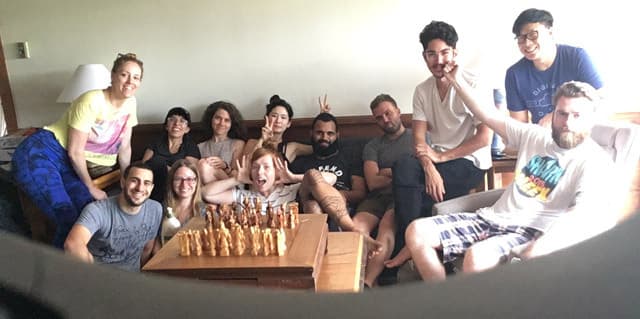
“You seemed to have hired from my perspective the strongest design team in NYC for size/stage of the company. Would love to learn tips from how you did it so I can do the same at ClassPass.”

When DigitalOcean first deployed Califa, it was issued a broken old MacBook Air and a vague task for the week. The first commit landed the next day. Real impact took months, because nobody had explained the lay of the land. New designers got a better start. Onboarding covered:
- The design team’s values, recently written down.
- How the design team and the company worked, the tools they used, and access to the right software and Slack channels.
- Training and starter tasks in Buoy, the design system.
- A deep dive into every current and future product, and how they fit together.
- An overview of every team design worked with, and how to work with each one.
- Meetings with the people they’d work with most, such as PMs and EMs.
Cloud is our main app
What is a Droplet?

What’s inside it?
What is Buoy?
What is Community?
Insights / Sonar
Working with Engineering
Working with Product
Goalfest
Communication
Documentation
Design Studios
Design Sprints
Designing for the future.
Getting a designer to build quickly is easy. Getting them to build the right thing quickly is harder. New designers were up and running within two weeks, with enough context to do great, high-impact work.
DigitalOcean had a strong learning culture, and growing each designer was a core part of the deployment. One UI Designer trained in UX methods and took on more complex projects over a year, until he earned the Product Designer title. A designer interested in management got regular mentorship, a stint leading the team, and then a promotion to lead the Brand Design team full-time. Another designer later took a similar path and went on to lead a Product Design team.
Other designers wanted to grow through their projects. Some wanted more variety or meatier UX work. Others wanted to run Design Sprints, spend more time on research, own the design system, or get better at Framer. Califa found a path for each of them while keeping every in-flight project covered. A designer who isn’t showing up on one project can be extremely productive on another.
The team’s work was good but not great. It wasn’t ambitious enough, for a few reasons:
- Engineering was short-staffed, so most projects were scoped down.
- Before the Product org found its footing, projects often changed several times mid-process.
- Buoy, the CSS style guide, made the platform consistent. Left unchecked, it also made it harder to try anything new.
Designs were usable but not compelling. They followed established patterns even when they shouldn’t have. The team had the skills to do much better and needed a push, which came in four parts: a process checklist, regular design reviews, regular design jams, and a new process for updating design patterns.
The checklist didn’t tell designers how to work. It listed what had to happen before a design could be approved for release. Holding every release to the same list raised standards across the board.
Design checklist
Before we release designs, they should go through every step here:
- 1. Vet idea—does the idea carry weight? If a PM comes to you with an idea, feel free to question it. Think about actual user problems—not products.
- 2. Design studio—perform at least one Design Studio per design with relevant stakeholders.
- 3. Heuristic evaluation—designs must live up to all heuristics and future principles set forth in the Design Principles document.
- 4. User testing—design prototypes should be tested with users before release.
- 5. Copy audit—our copy should be checked, rewritten or approved by a Copywriter before release.
- 6. Design review—final iteration of design before release must have gone through a design review.
- 7. Data tracking—code should be set up to answer questions we have about the design’s effectiveness, so the next iteration can be better.
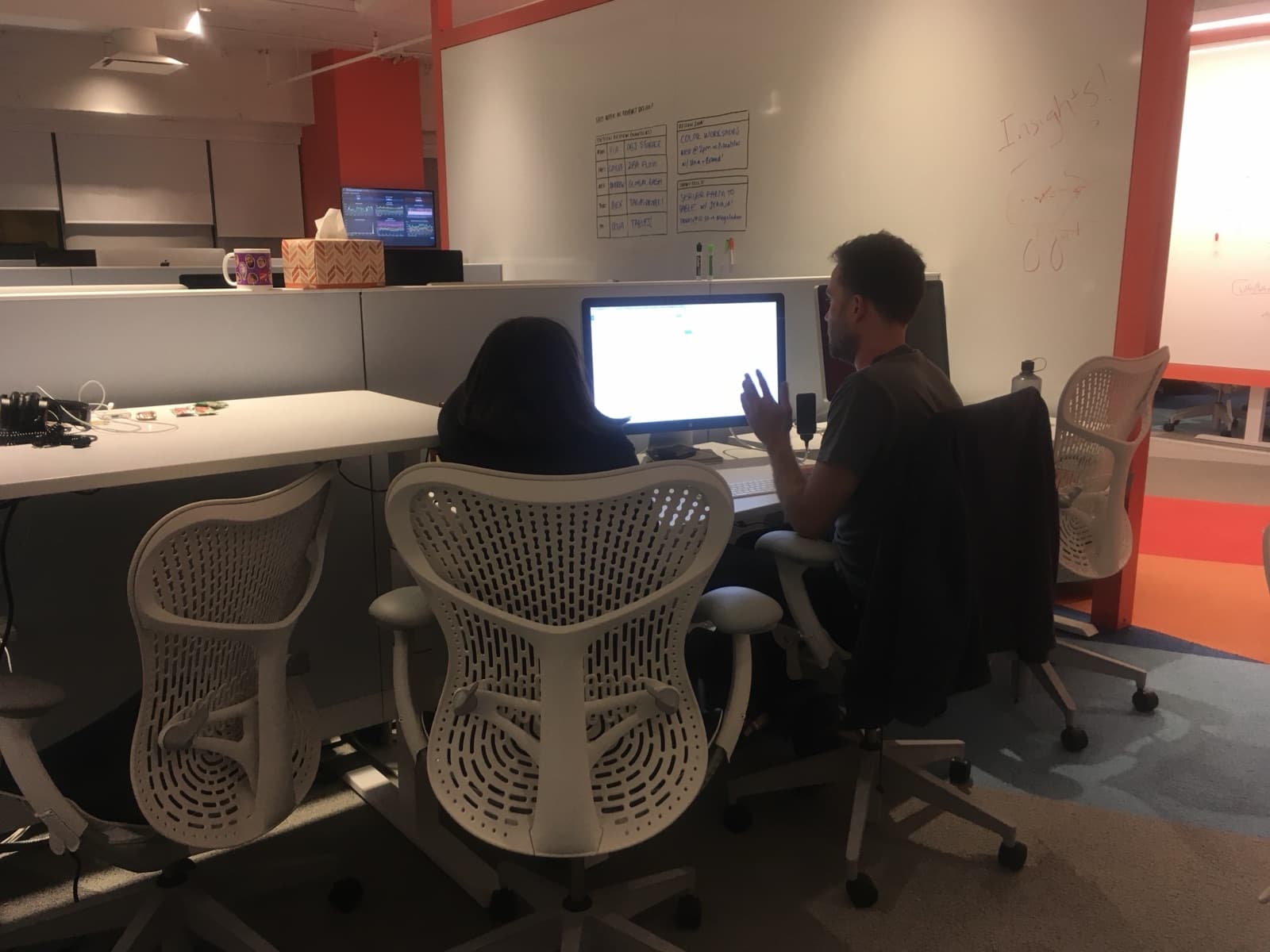
Califa started hour-long critiques three times a week, which later became half-hour critiques every day. They followed standard practice. Laptops and phones down. One designer facilitates and takes notes. The presenter gives context, shows the work, and says what kind of feedback they want. Everyone else asks questions and gives feedback. The group then recaps the notes and writes next steps, usually to resolve specific issues or explore part of the design. The presenter is held to those steps at their next review.
| Row | A | B | C | D | E |
|---|---|---|---|---|---|
| 1 | Date | Day | Facilitator | Presenter | Project |
| 91 | 5/16/2016 | Monday | Caylee | Andrew | Account-level graphs |
| 92 | 5/17/2016 | Tuesday | |||
| 93 | 5/18/2016 | Wednesday | Andrew | Celia | Card sorting activity |
| 94 | 5/19/2016 | Thursday | Colin | Andrew | Account-level graphs |
| 95 | 5/20/2016 | Friday | Caylee | Colin | New Pattern + Billing |
| 96 | 5/23/2016 | Monday | Andrew | Alex | Team Accounts live on cloud |
| 97 | 5/24/2016 | Tuesday | --- | --- | |
| 98 | 5/25/2016 | Wednesday | Alex | Caylee | Questions work |
| 99 | 5/26/2016 | Thursday | Alex | Colin | Feedback Survey + Attachments |
| 100 | 5/27/2016 | Friday | --- | Celia | Early Networking work |
| 101 | 5/30/2016 | Monday | |||
| 102 | 5/31/2016 | Tuesday | --- | Joel | Thing |
| 103 | 6/1/2016 | Wednesday | Andrew | How do you get to dashboard? | |
| 104 | 6/2/2016 | Thursday | Celia | Colin | Attachments |
| 105 | 6/3/2016 | Friday | |||
| 106 | 6/6/2016 | Monday | Colin | Andrew | Cloud Charts |
| 107 | 6/7/2016 | Tuesday | Andrew | Celia | Early Networking work |
Reviews also became where the team worked with Brand Design on brand changes, illustrations, and color palettes headed for the product. Califa attended almost every review as a fellow designer, not a manager with extra authority, and pushed every time for more exploration, better reasoning, closer attention to detail, and more ambitious work. Soon the designers were pushing each other for the same things. Regular design reviews did more for design quality than anything else the team tried.
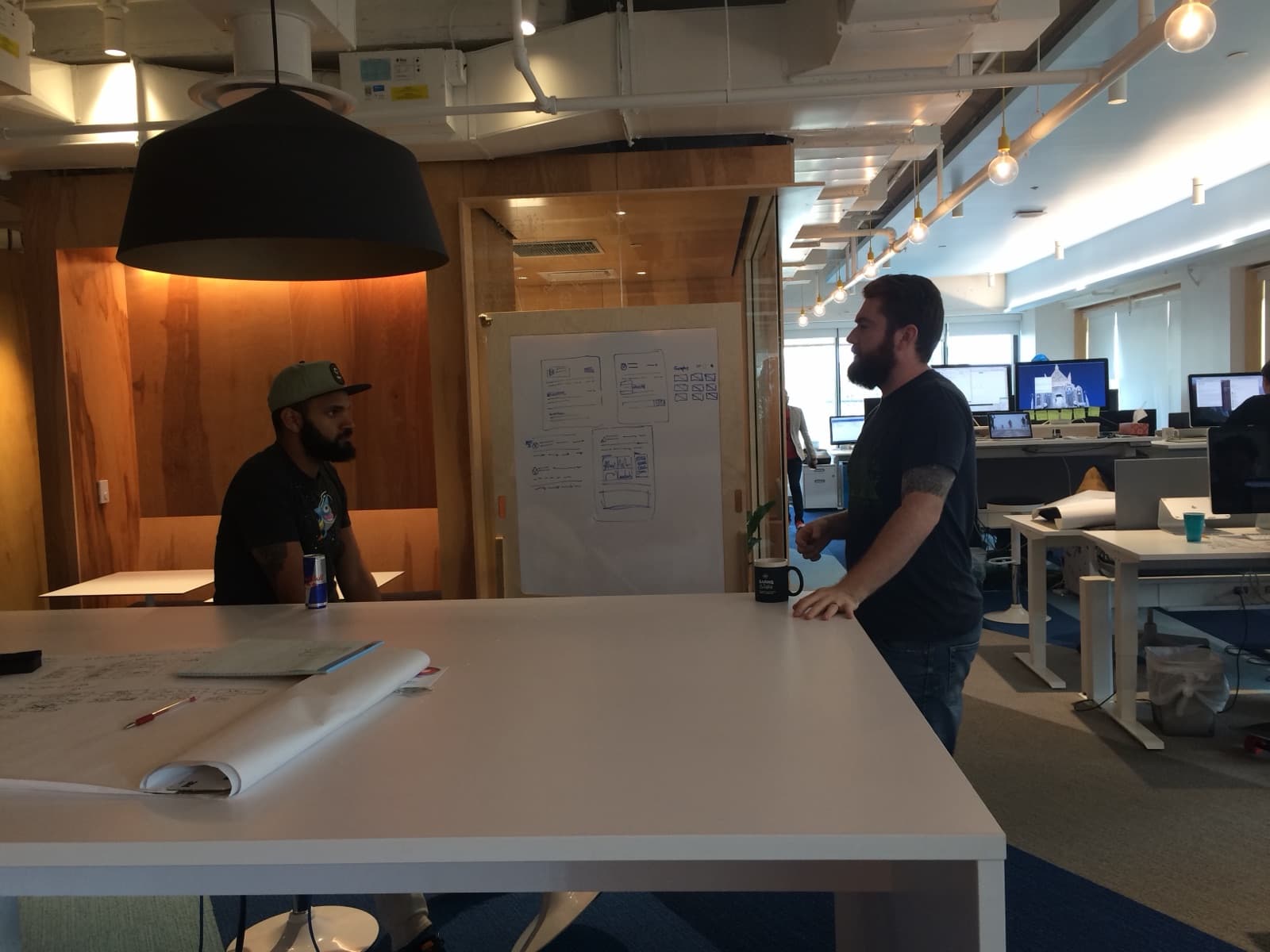
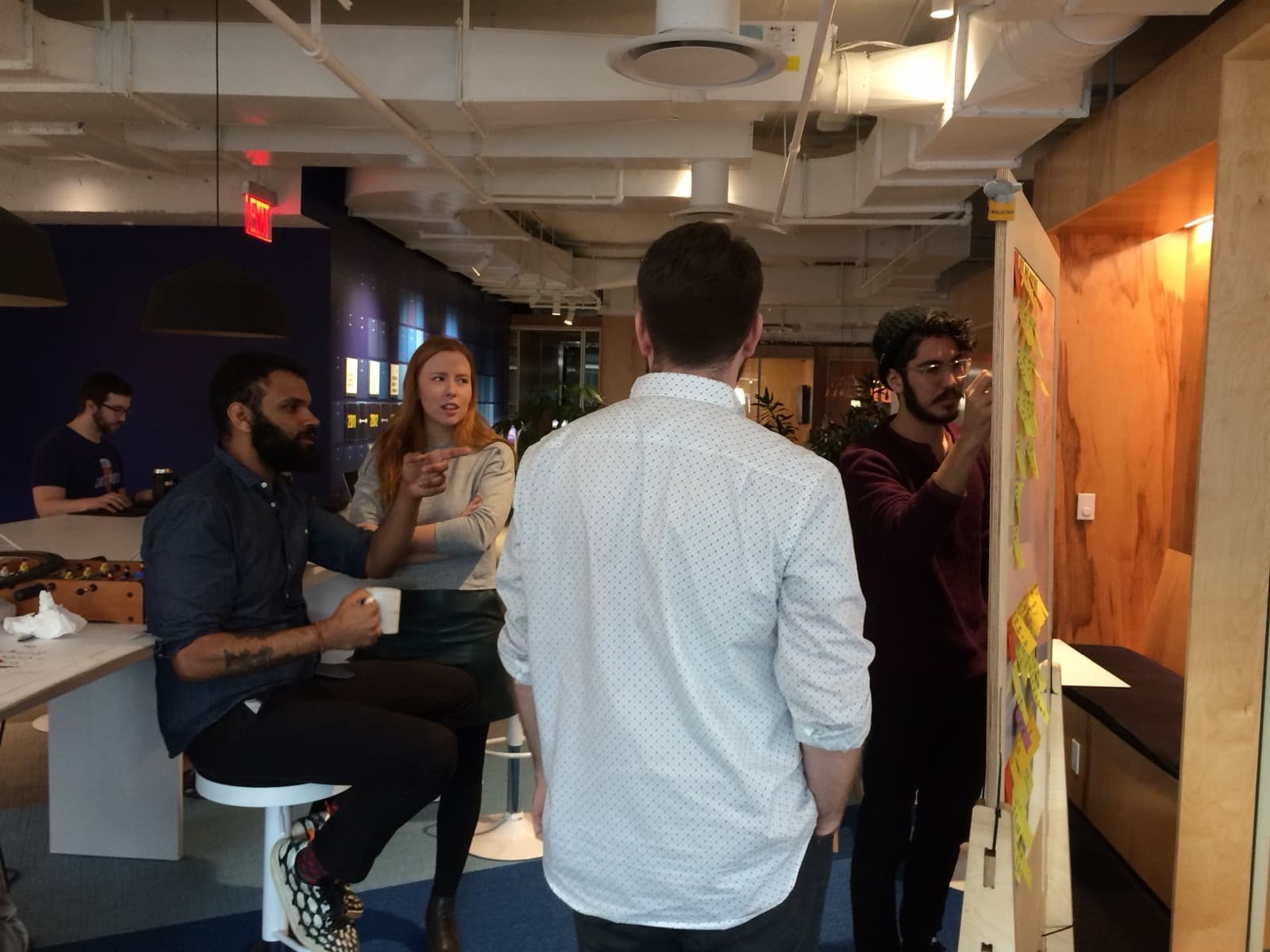
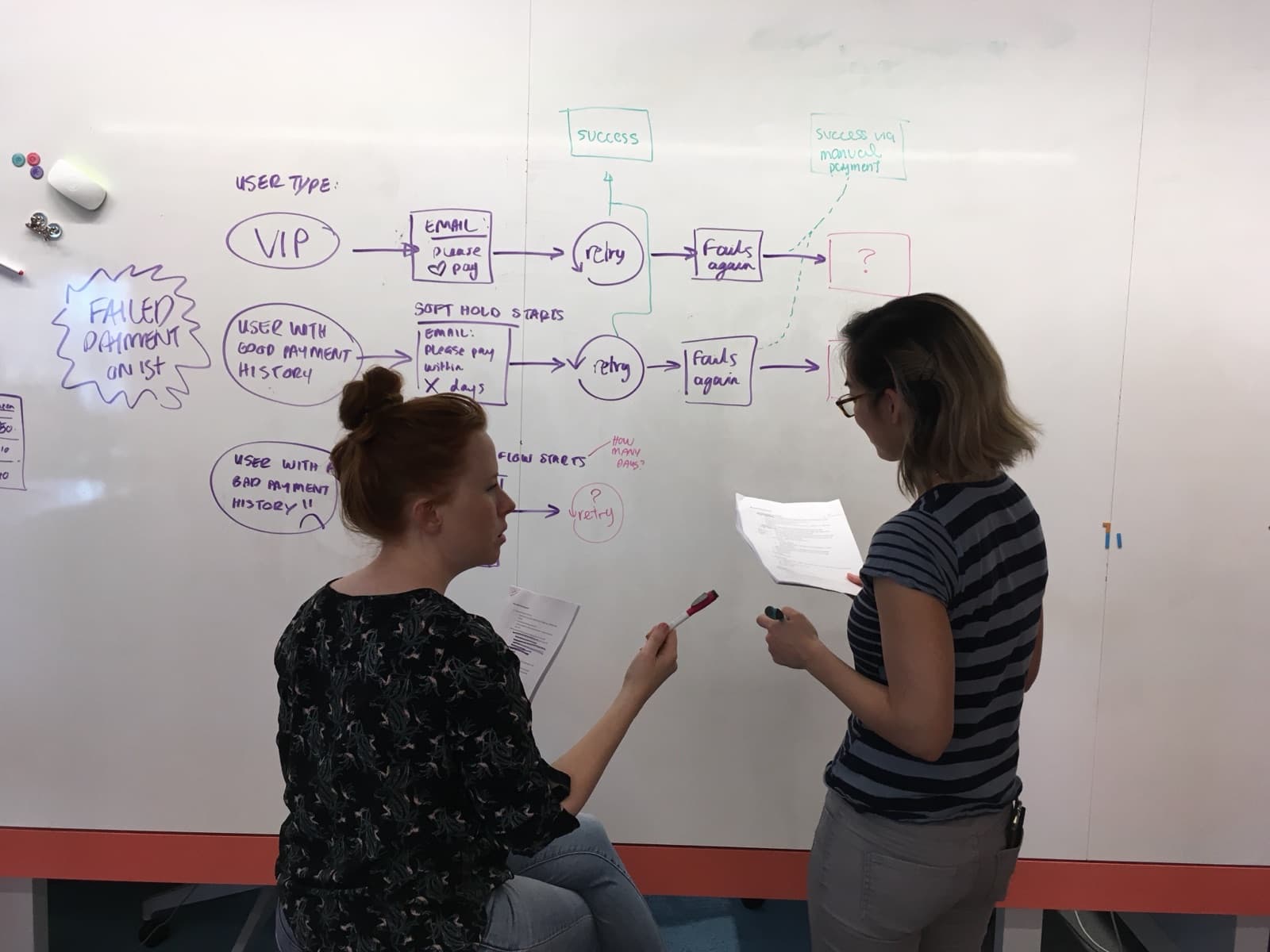
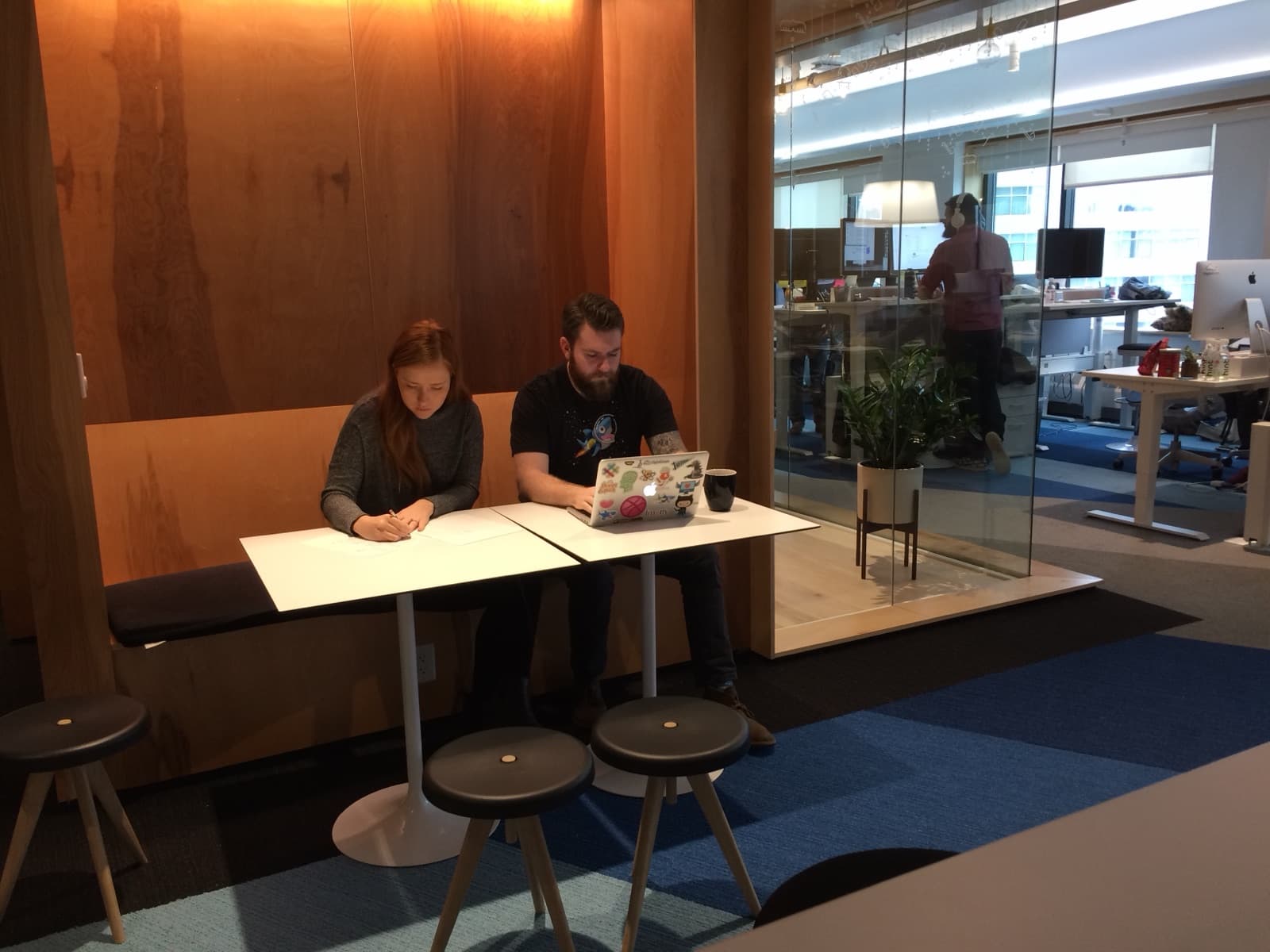
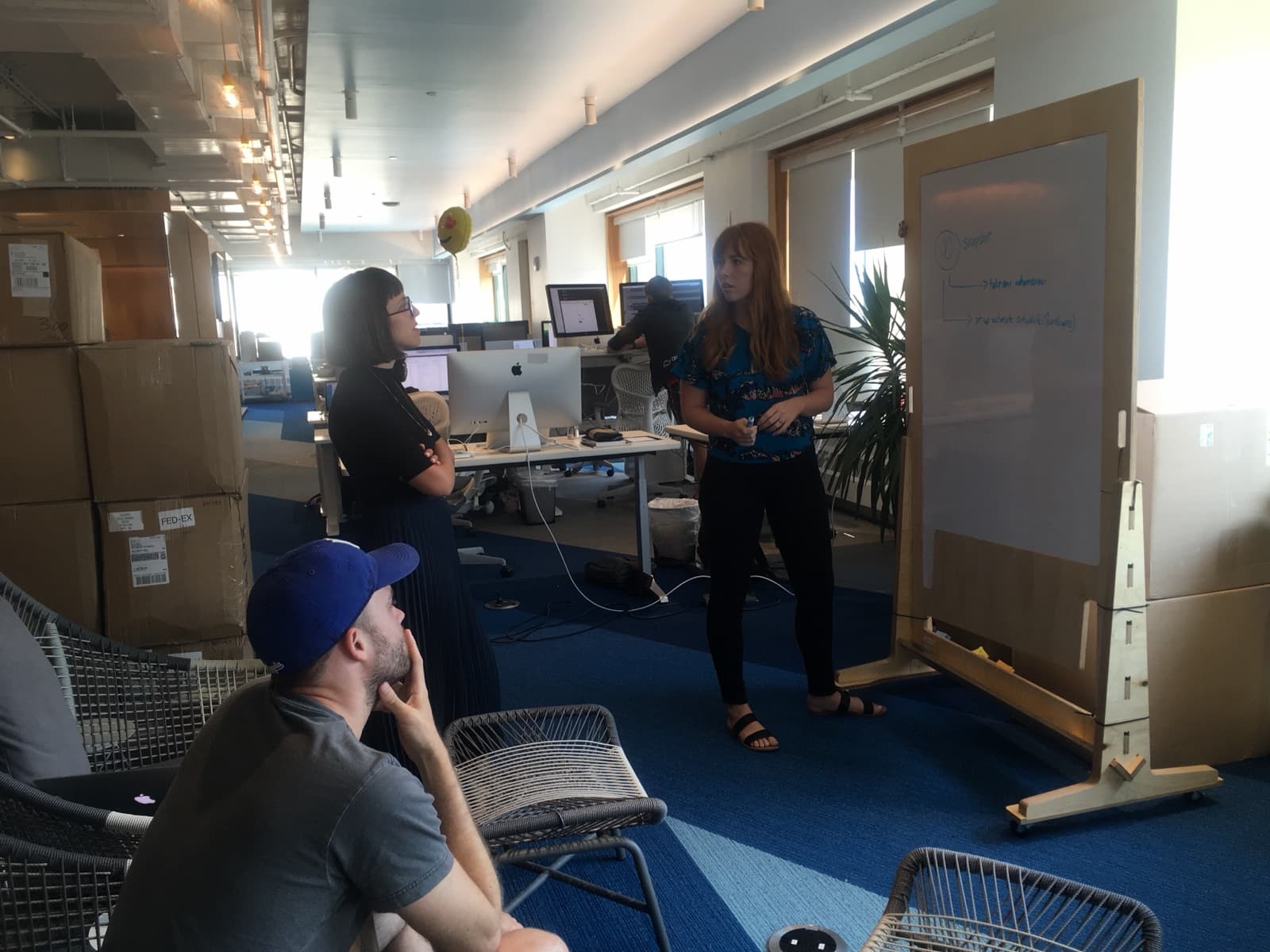
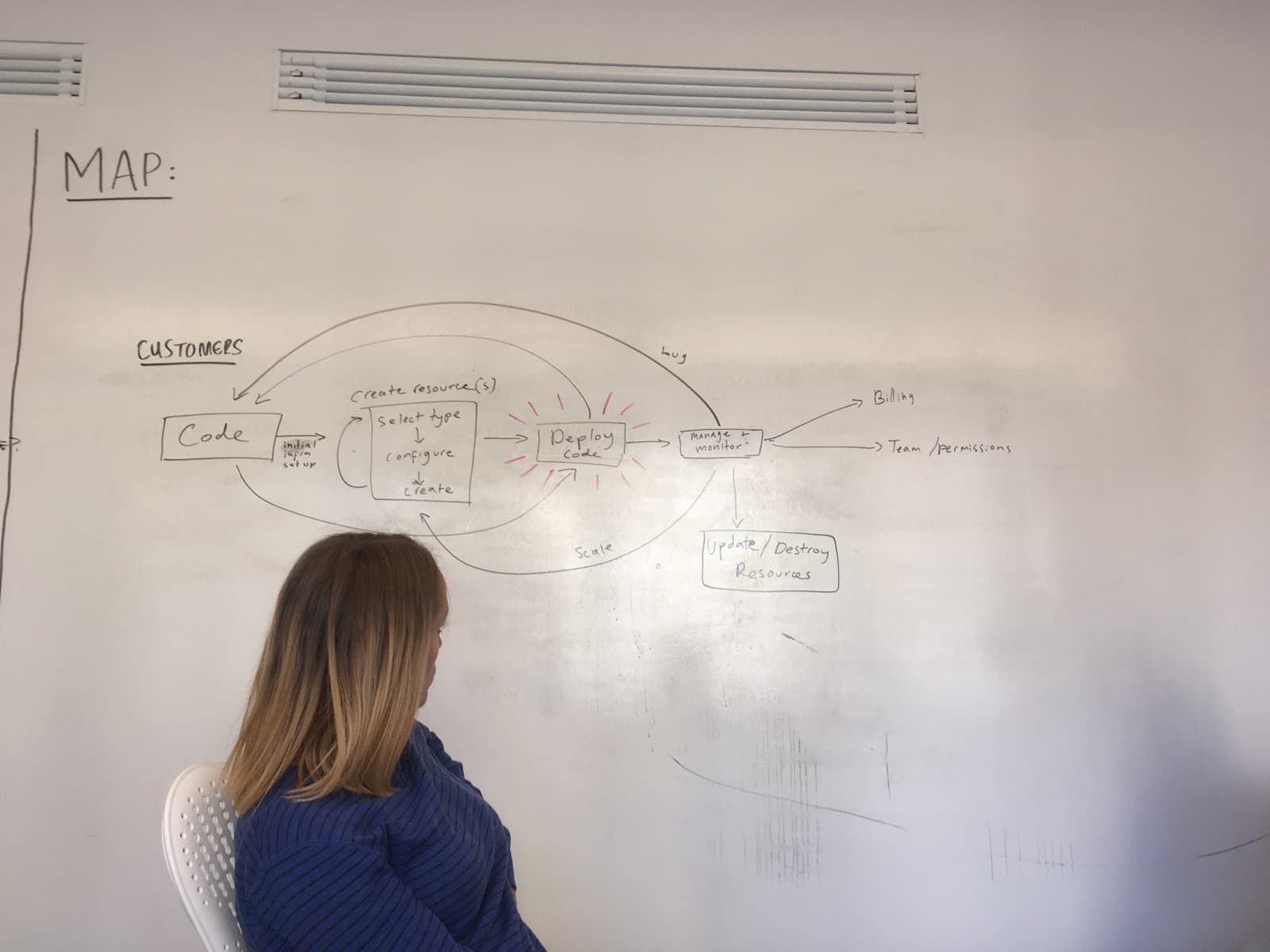
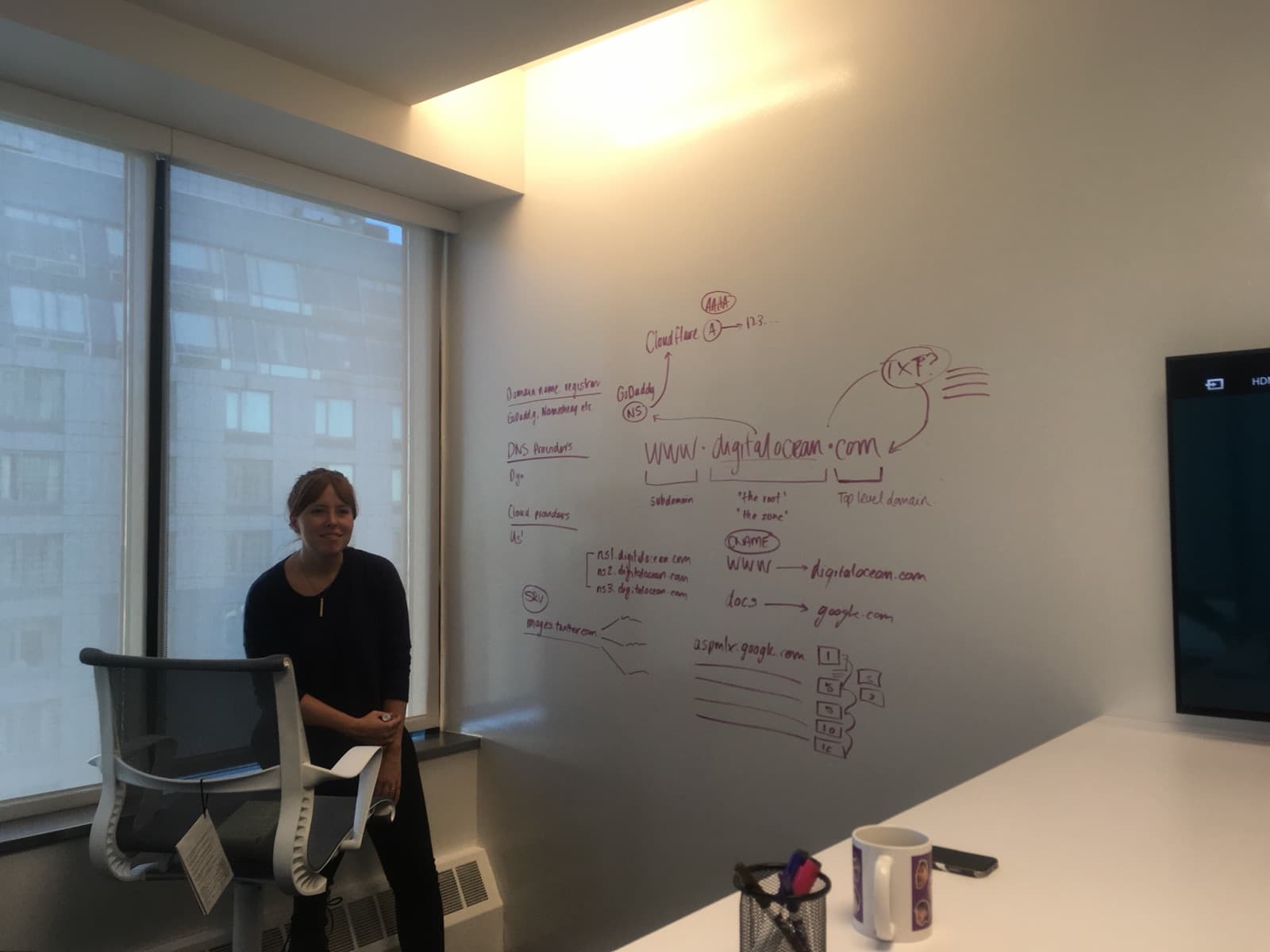
Later that year, some designers moved out of the design pod to sit with their PMs and engineers. The team lost the collaboration that happens when two designers’ screens are side by side, and asked for a fix. The fix was a weekly design jam. Designers signed up to bring a problem and work through it at a whiteboard with the rest of the team.
Eventually Buoy started to hold the team back. Together, the team created a process for changing patterns. Designers could try patterns outside the design system, knowing the good ones could be folded in later. The process made them think through the whole system before committing to a change, which kept the product consistent and gave designers more freedom.
Step 1. Validate the idea, have a concrete proposal, reasoning
Step 2. Design Planning
- Make sure you’re not messing up other designs, see if they work w/ the new pattern
- These can be rough mocks to see if it could work
- Get validation from designers on each product team it affects.
- Either change everything across the app or use the main pattern.
Step 3. Logistics
- Create ticket for designers to create new designs
- Create tickets for each team to conform to new designs, deadline is tentatively one month to ship new designs.
Together, these four changes made the team more enthusiastic, more ambitious, and noticeably better at its work.
That left trust. The design team had always been close-knit, with a great culture. It was also siloed. The team produced a lot of great work, and other departments saw it too late. The company stopped trusting design. People didn’t know what the team was working on, and when they found out, they didn’t know why. The platform and network engineers who built the technology had no part in deciding how customers would use it. Leadership wasn’t involved in most of the design process, so it wasn’t invested in the results.
Design was also missing perspectives it needed, sometimes ones that decided whether a product was viable at all. Support would see a design in production and point out that it wouldn’t survive fraud. Engineers would see a design several rounds in and add context that changed the product. Leadership would see designs late and cut whole features, and the team would scramble to ship something worse instead of a thoughtful MVP. It was the design team’s responsibility to change that. It had left working with the rest of the company to other people and focused on the work. Two initiatives fixed it.
The first was the design studio, a small Design Sprint used to kick off a project. The Product Designer invites everyone involved to a structured brainstorming session. That usually meant a PM, the software engineers building the product, and the platform and network engineers building the technology underneath. Depending on the project, Support, Marketing, Customer Success, or Operations might join.
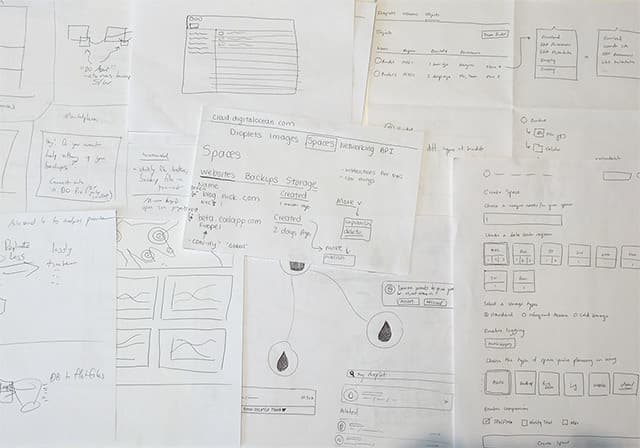
Sessions followed a set structure:
- 10m: The Product Designer explains the problem
- 10m: Sketch session (everyone sketches, not just designers)
- 10m: Each person explains their sketches (2m per person)
- 5m: Each person lists what they liked most about other designs (1m per person)
- 25m: Repeat the last three steps
Afterward, the designer picked the ideas with the most potential and turned them into a first prototype. Studios didn’t produce a final design. They did four other important things:
- They brought in valuable perspectives that led to better solutions.
- They spread context and opened a line to engineering that stayed open for the rest of the project.
- They shared ownership of the design, which meant less friction during the build and engineers who felt more connected to the product. One senior engineer who had been at the company for years said it was the first time they’d had any say in the interface, and that it felt amazing.
- They built trust in Product Design by showing colleagues what the team actually does.
The team never treated craft as something only designers could do. With the right guidance, anyone can take part. Califa had hired designers who valued collaboration and left their egos at the door. They just hadn’t had a channel for it. Design studios became the standard way to start a project.
That said, design studios don’t scale to 300 people. Leadership needed more visibility into the process, and design still needed a way to build trust with the entire company, keep every potential stakeholder informed of progress and let them step in where needed, and tap into knowledge from every part of the company.
The answer was The Product Design Gazette, a company-wide email Califa sent every other week. It quickly became everyone’s favorite email. Each issue included anything that might be interesting or build trust: early ideation, wireframes and brainstorming sketches, design research decks and specifications, case studies for UX processes, findings from Design Sprints, mocks of different directions, prototypes, and polished UI right before release. Each issue explained the process and gave readers as much context as possible, not just the pretty pictures.
Hey everyone!
You might be wondering why there’s another email in your inbox. Let me tell you about it!
This is the first of what we hope will be many frequent updates from the Product Design team (likely on a bi-weekly, semi-weekly, or fortnightly cadence, depending on which you subscribe to).
It includes a lot of what we’ve been working on lately, and we hope that it’ll get you as excited as we are about what DigitalOcean has in store.
Moving forward we’ll try to be extra transparent, and that means that a lot of these designs will be mid-process and not fully baked. Some will be sketches or wireframes, others will be prototypes or high fidelity mockups. Not all of them represent the directions we’re ultimately going to go towards. Keep that in mind as you’re looking through these.
Everyone at DO is creative, talented, and can offer a unique perspective on the problems we’re trying to solve. We would absolutely love to hear your feedback. If you want to provide it, here’s how to do that:
- Slack it directly to the designer responsible.
- Focus on problems, not solutions. The absolute best critique you can give us is a problem you found with our designs. Don’t worry about how to solve them, that’s what we’re here to do! :)
We hope you enjoy this and look forward to more in the future!
—Joel
“This is an amazing update, with so much good work that hard it’s to remember everything. Loving all this and please keep up the good & hard work of keeping DO simple.”

“still my favorite email to receive =]”

Replies came from nearly every department, including Engineering, Support, People, Finance, Community, Product, Brand, Customer Success, and Sales, and from every level, interns to the CEO. Everyone felt involved in the design process, and the company came to trust design with the product. Some of the replies:
- “This is the best-designed email I’ve gotten in my inbox. Well done.”
- “Good stuff, Joel. I sit right next to you and I know more now about what you do than I ever have!”
- “This is amazing! Thanks for putting it together, and for the great designs.”
- “How do I subscribe to this or is this something you plan to send out weekly, monthly?”
- “Top notch content as always, I really enjoy reading through these”
- “Wonderful as usual, thanks for the updates. I like how you shouted out certain people from other departments, nice touch Joel-san.”
- “LOVE the wireframes!!! HURRAH for rapid prototyping and moving fast!”
Others brought questions and feedback that helped other teams build the right supporting technology. The company learned what kind of feedback helps, so designers got useful feedback every time a Gazette went out. People looked forward to it, and asked about it when an issue was late. It became one of the main ways people found out where new products stood, even in Engineering. Most importantly, it convinced the company that Product Design knew what it was doing.
In its time leading Product Design at DigitalOcean, Califa doubled the team and put processes in place that helped each designer do their best work. The team became tight-knit and high-performing, and was known across the company for how healthy it was. Regular transparency earned Product Design more trust and more leeway across the board.
None of these processes were meant to restrict anyone. They added structure where structure was needed. The team usually designed them together, and most of them stuck because the designers liked them. Califa ran the team hands-off. It hires good people and gives them room. It clears roadblocks, breaks ties, helps with personal development, and is there to talk. It pushes back when the team can do better, on output, ambition, or quality. It does not design for them.
Califa didn’t design the products DigitalOcean shipped in that period. Its team did, and Califa made sure they could.
Califa has run the same practices in later deployments. At Heap, a quarterly company-wide deck gave every usability improvement its own slide. At Unify, leadership got 18 written updates in two quarters.
More from the deployment.
 32 min
 65 slides
Your team could be next.
The processes above are included in every tier. The team photo is your own responsibility.